AI agents and the ADLC, in three steps.
Start with what an agent actually is. Then see how teams build software with agents, safely. Then try leading a team yourself. Every step is animated or interactive, and works on your phone.
-
1
Start here
Agents 101
One duplicate bank charge, fixed three ways: phone tree, chatbot and agent. What agents can do that chatbots can't, and where humans step in.
-
2
ADLC in Motion
How teams build software with agents, from intent to production: who does what, where the gates are, and why humans keep the important calls.
-
3
Ship It: the ADLC game
Lead the team for six sprints. Agents write the code, gremlins hide in it, and you decide where human judgment goes.
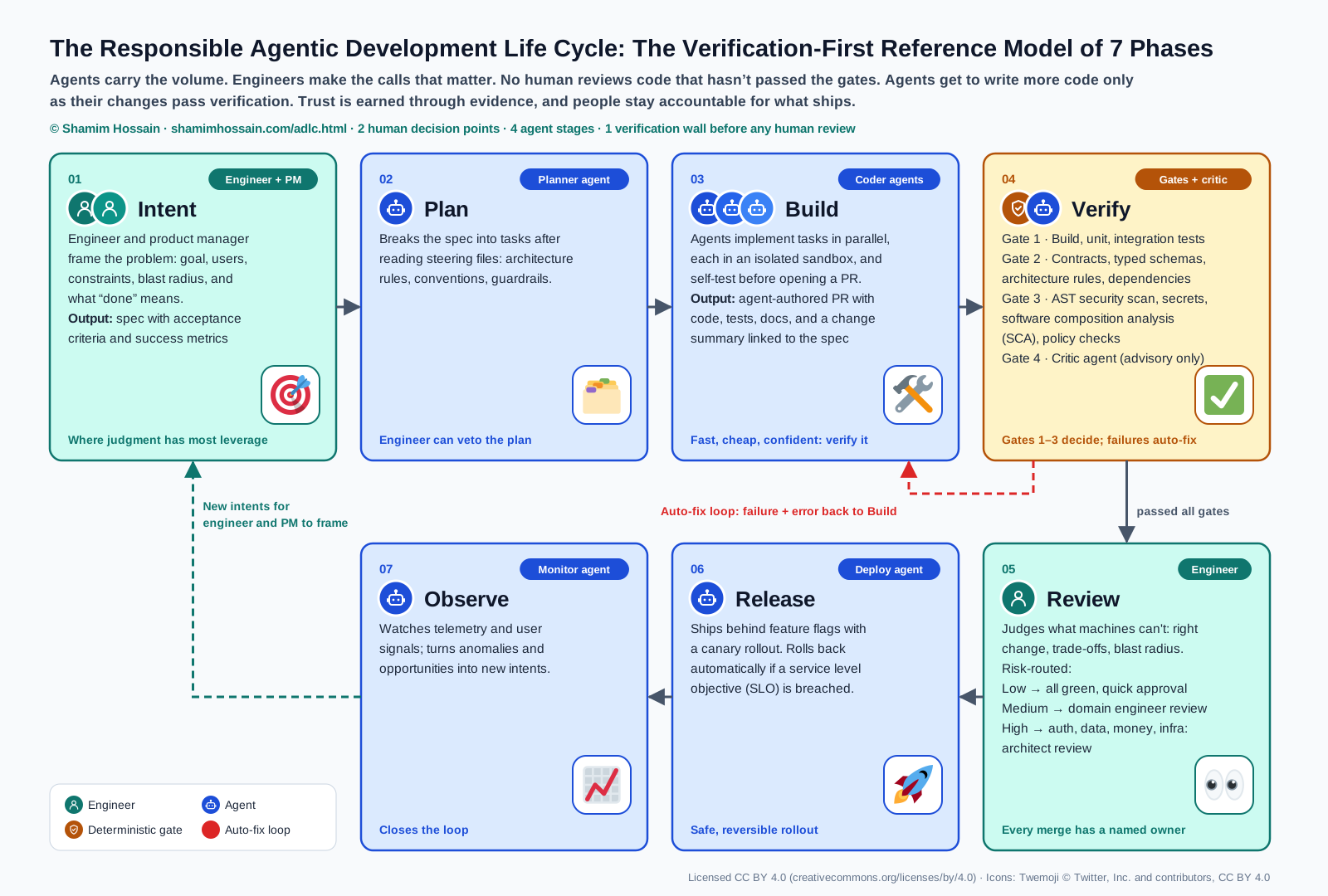
The ADLC reference model, on one page
All seven phases in a single diagram: who does what, what each phase hands forward, the verification gates, risk-routed review, and the auto-fix loop. Use it in your team discussions, slides and docs.
It's a condensed reference, so a few details differ from the deep dives, which walk through one worked example. In the deep dives, for instance, the critic's findings also loop back to Build, and Verify includes mutation testing.
SVG, 24 KB, sharp at any size. Opens in any browser; most design and slide tools import SVG (Google Slides doesn't).
Licensed CC BY 4.0: share and adapt it, including commercially, with credit to Shamim Hossain, shamimhossain.com. Icons: Twemoji © Twitter, Inc. and contributors, CC BY 4.0.
Text version of the diagram
- Intent (engineer and product manager): frame the problem: goal, users, constraints, blast radius, and what "done" means. Output: a spec with acceptance criteria and success metrics. Where judgment has most leverage.
- Plan (planner agent): breaks the spec into tasks after reading steering files: architecture rules, conventions, guardrails. The engineer can veto the plan.
- Build (coder agents): implement tasks in parallel, each in an isolated sandbox, and self-test before opening a pull request with code, tests, docs and a change summary linked to the spec.
- Verify (gates and a critic): Gate 1, build, unit and integration tests; Gate 2, contracts, typed schemas, architecture rules, dependencies; Gate 3, security scans, secrets, software composition analysis, policy checks; Gate 4, a critic agent (advisory). Failures loop back to Build automatically.
- Review (engineer): judges what machines can't (the right change, trade-offs, blast radius), routed by risk: low risk gets a quick approval, medium a domain engineer, high (auth, data, money, infrastructure) an architect. Every merge has a named owner.
- Release (deploy agent): ships behind feature flags with a canary rollout, and rolls back automatically if a service level objective is breached.
- Observe (monitor agent): watches telemetry and user signals, and turns anomalies and opportunities into new intents for the engineer and product manager, closing the loop.